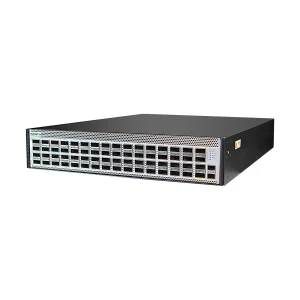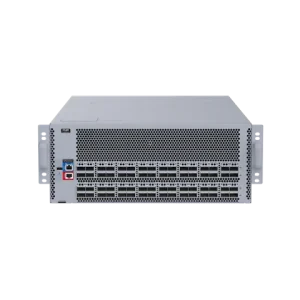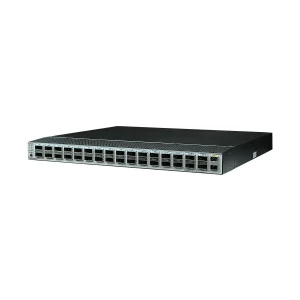
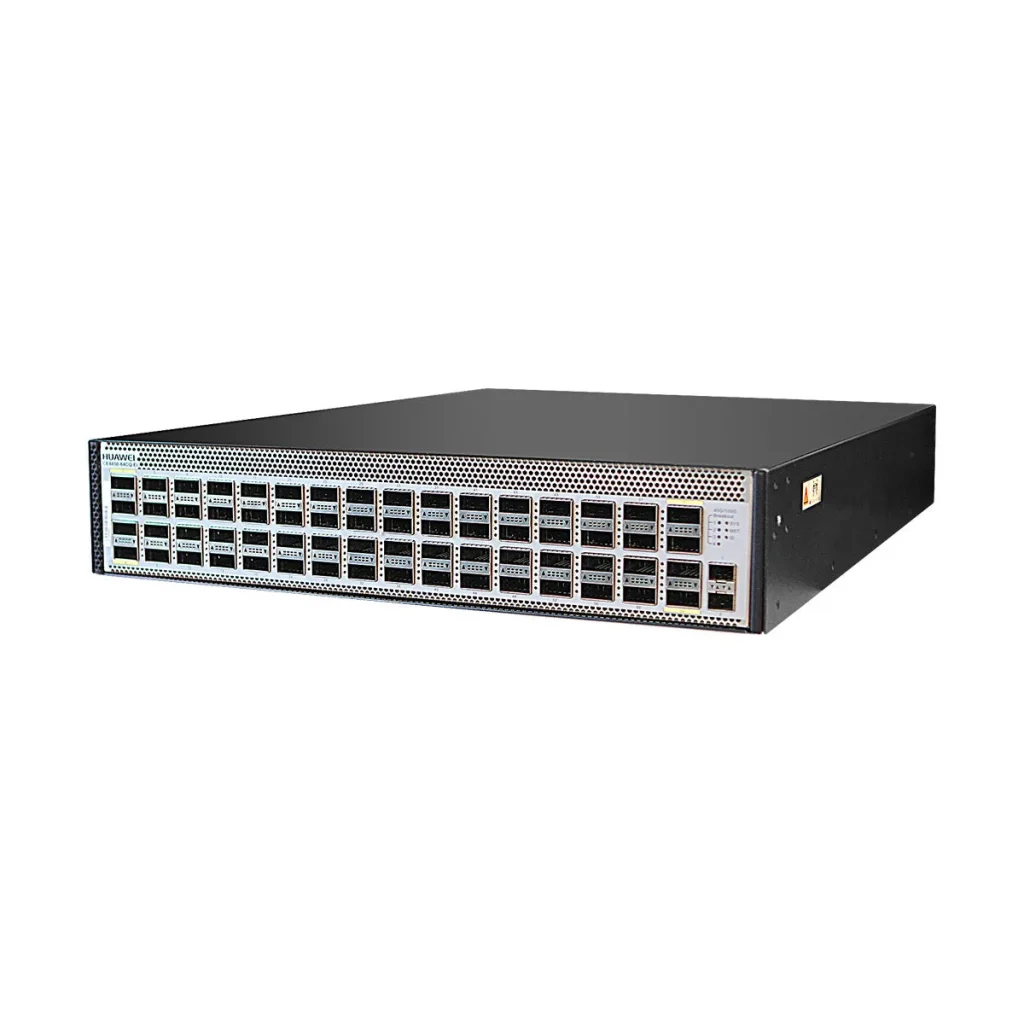
A 64-port 100G faceplate and a 64-port 400G faceplate solve different optic plans. Density looks similar on a spreadsheet. The ports do not.
Buyer rule: if servers are still 10G or 25G, leave this article. Start from a leaf guide instead.
What “64 ports” actually means
Procurement sheets often collapse both platforms into “64-port spine.” That label hides the optic and rack class:
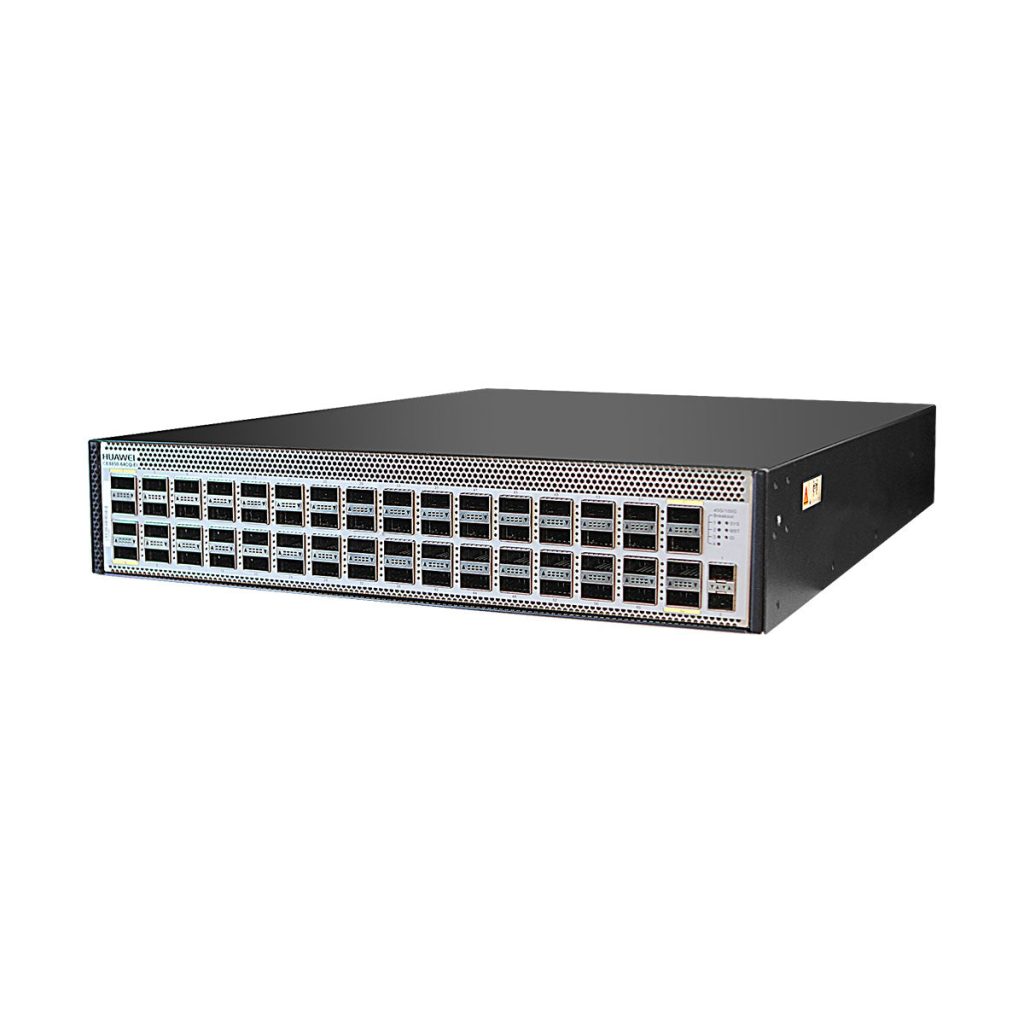
- CE8850-64CQ-EI is a fixed 64 × 100GE QSFP28 faceplate. Every working port on the listing is 100G-class. There is no separate uplink row on this PID.
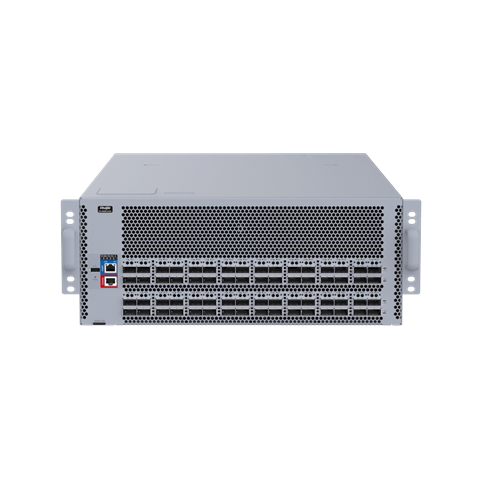
- RG-S6980-64QC is a fixed 64 × 400GE QSFP-DD faceplate on a 4RU chassis. It is a next-generation fabric port plan, not a “faster 100G switch.”
Buying the wrong class usually means wrong optics, wrong rack depth, wrong power plan, and a redesign — not a simple software toggle.
Optic generation
| Generation | Faceplate class on these PIDs | What the RFQ must name |
|---|---|---|
| QSFP28 / 100G | CE8850-64CQ-EI · CE8850-32CQ-EI | QSFP28 optic type, reach, and day-one lit count |
| QSFP-DD / 400G | RG-S6980-64QC | QSFP-DD optic type, reach, and how many 400G links light on day one |
QSFP28 and QSFP-DD are different form-factor / speed classes on these listings. Do not treat “64 ports” as interchangeable SKUs. Confirm peer-device ports and optic contracts before you shortlist hardware.
This article does not invent transceiver compatibility matrices. Ask sales for the optic matrix that matches your exact PIDs and software train.
Breakout planning
Breakout is a design requirement, not a checkbox on the switch line item. Before ordering:
- State whether any port must break out to lower-speed peers.
- Name the peer NIC or peer switch port speed.
- Confirm the optic and cable plan for that breakout path with documentation — do not assume every QSFP28 or QSFP-DD port breakouts the same way on every PID.
- If breakout is not required, say so explicitly so the quote stays on native 100G or native 400G optics.
100G vs 400G design requirement
Choose the generation from the fabric plan, not from a “higher speed is safer” reflex.
| Design question | Points toward 100G faceplate | Points toward 400G faceplate |
|---|---|---|
| Current traffic / optic contracts | QSFP28 already specified | QSFP-DD / 400G already specified |
| Server or fabric role | 100G spine / dense 100G fabric | Native 400G spine / AI-HPC-class fabric ports |
| Port-count need | Need ~32–64 × 100G now | Need many native 400G ports now |
| Migration | Stay on 100G this phase; revisit later | 400G is a day-one requirement, not “headroom” |
If day-one optics remain 100G, a 400G chassis bought “for headroom” still needs 400G-capable optics, peer ports, and rack/power that match that class. Match the optic generation first.
Capacity and forwarding
| Model | Switching capacity | Forwarding | How to read it |
|---|---|---|---|
| CE8850-32CQ-EI | 6.4 Tbps | 3,200 Mpps | Enough when ~32 × 100G covers the plan |
| CE8850-64CQ-EI | 12.8 Tbps | 4,482 Mpps | Scales with a full 64 × 100G faceplate |
| RG-S6980-64QC | 51.2 Tbps | 10,300 Mpps | Applies to a 64 × 400G faceplate — not a reason to skip optic planning |
Larger Tbps or Mpps is not an automatic win. A 51.2 Tbps 400G switch does not help a design that still lights QSFP28 peers. Compare capacity inside the same optic generation, after port count is settled.
Power, cooling, and rack
| Dimension | CE8850-64CQ-EI | RG-S6980-64QC |
|---|---|---|
| PSU | Dual hot-swappable AC/DC modules | 2+2 hot-swappable (4 slots) |
| Fans | Confirm on quote / datasheet page | 7+1 hot-swappable (8 slots) |
| Rack units | ~2U class (height ~86.1 mm) | 4 RU (height ~173.6 mm) |
| Depth | ~600 mm | ~735 mm |
| Weight | ≤ 22.2 kg on authorized data | ~48 kg with modules |
| Operating temp | 0°C to 40°C | 0°C to 45°C |
Confirm airflow direction and rail kit for the deeper chassis on the RFQ. A 4RU / 735 mm platform changes row planning even when both SKUs are “64-port.”
Migration path (without a universal plan)
- 100G now: stay on CE8850-32CQ-EI or CE8850-64CQ-EI when optics and peers are QSFP28.
- Mixed generation: if some 400G ports appear while most links stay 100G, shortlist a mixed faceplate (for example RG-S6580-48CQ8QC class) — do not stretch a pure 100G or pure 400G PID to pretend it is mixed.
- 400G requirement: move to RG-S6980-64QC only when native 400G density is the requirement.
There is no single migration ladder that fits every fabric. Write the optic count by generation on the quote request.
Grounded shortlist
| Need | Start from | Faceplate | Capacity | Forwarding |
|---|---|---|---|---|
| 64 native 100G ports | CE8850-64CQ-EI | 64 × 100GE QSFP28 | 12.8 Tbps | 4,482 Mpps |
| 64 native 400G ports | RG-S6980-64QC | 64 × 400GE QSFP-DD | 51.2 Tbps | 10,300 Mpps |
| About 32 × 100G | CE8850-32CQ-EI | 32 × 100GE + 2 × 10GE | 6.4 Tbps | 3,200 Mpps |
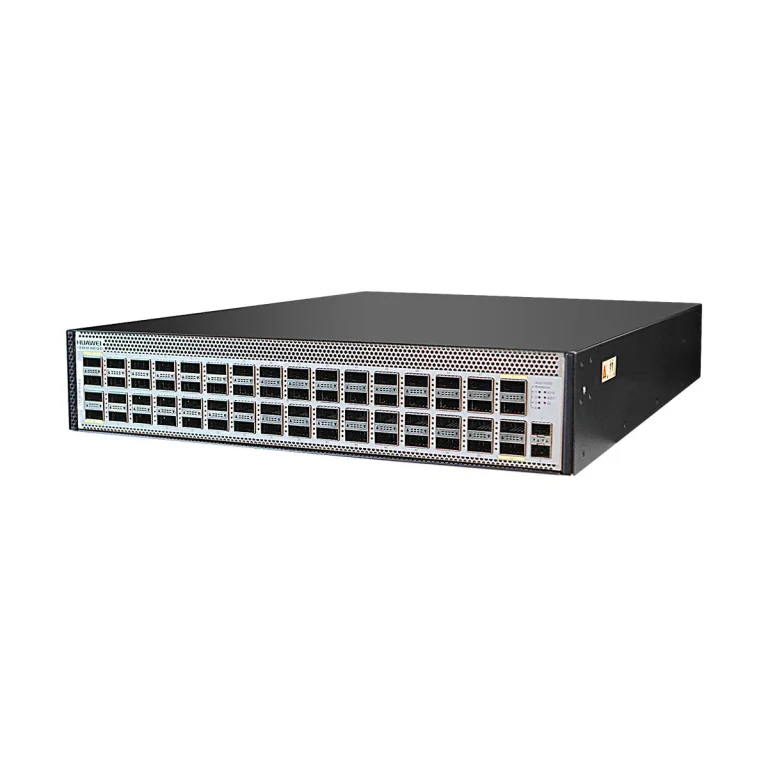
CE8850-64CQ-EI
64 × 100GE QSFP28
12.8 Tbps · 4,482 Mpps
Start here when every required port is 100G and density must be 64.
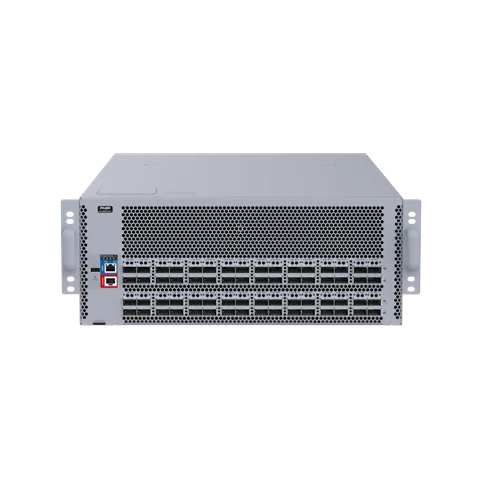
RG-S6980-64QC
64 × 400GE QSFP-DD · 4RU
51.2 Tbps · 10,300 Mpps
Start here only when the fabric optics are 400G.
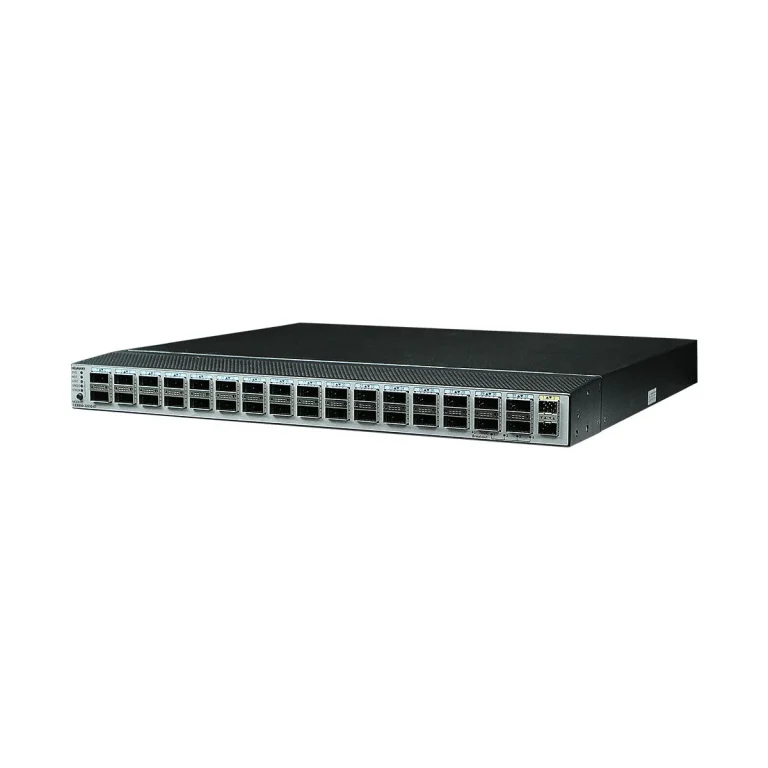
CE8850-32CQ-EI
32 × 100GE QSFP28 + 2 × 10GE
6.4 Tbps · 3,200 Mpps
Stay here when thirty-two 100G ports are enough.
Common procurement mistakes
- Counting “64 ports” without checking optic generation (QSFP28 vs QSFP-DD).
- Buying 400G hardware when the design still needs 100G density and QSFP28 peers.
- Ignoring 4RU height, ~735 mm depth, and weight on the 400G chassis.
- Leaving optics off the RFQ (“QSFP generic”).
- Comparing Tbps across faceplates without matching port speed class.
- Assuming stock, airflow, or PSU module PIDs without asking.
- Skipping breakout / peer confirmation when lower-speed attachments are planned.
Comparison: CE8850-32CQ-EI vs CE8850-64CQ-EI · Guide: Catalyst 3850 fiber aggregation buying guide · 100G fixed switch guide · Request a quote