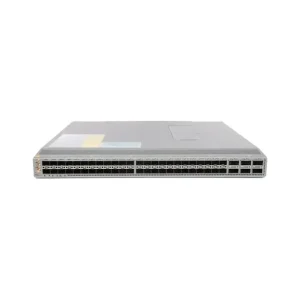
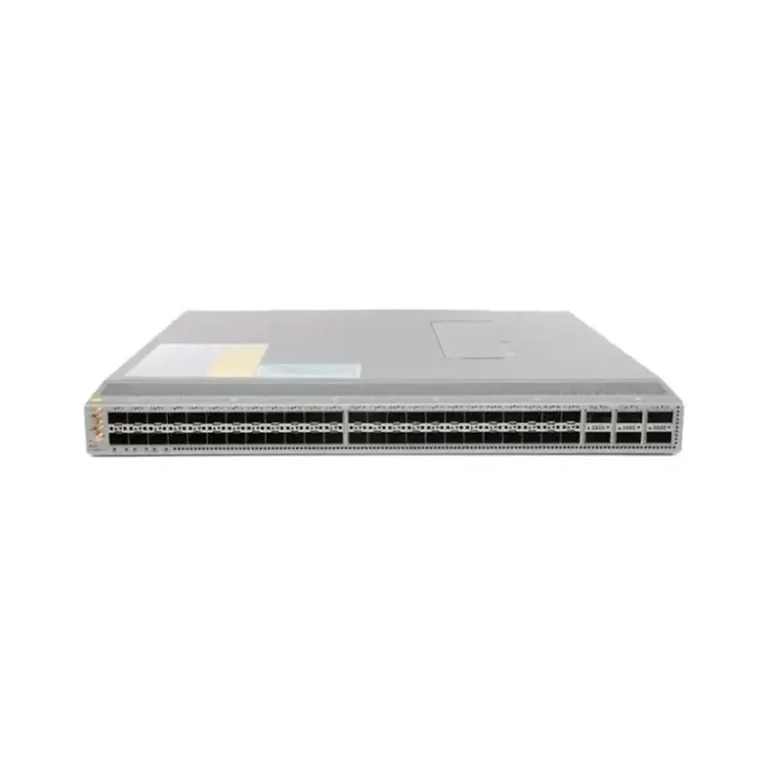
48 × 1/10/25G SFP28 + 6 × 40/100G QSFP28
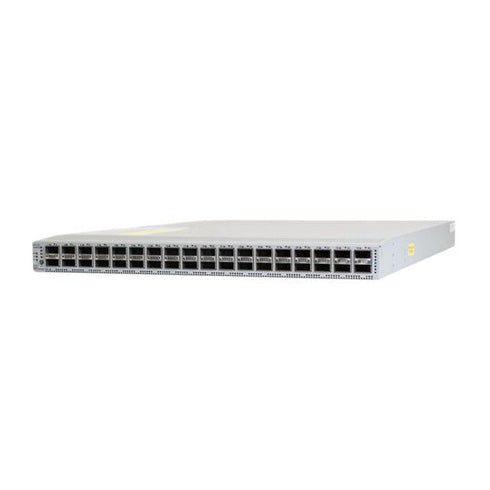
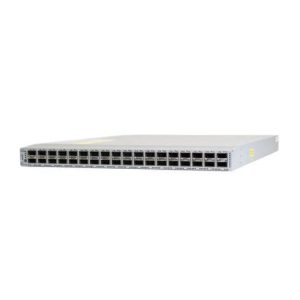
28 × 40/100G QSFP28 + 8 × 40/100/400G QSFP-DD
Data-center RFQs still say “Nexus leaf” as if that were one SKU. It is not. A 25G SFP28 leaf and a 100G/400G GX leaf solve different fabric problems — and some reseller pages still paste the wrong faceplate onto the wrong PID.
The procurement problem
Server/storage optics decide the leaf more often than brand familiarity. If attach is SFP28 at 25G, a QSFP28/QSFP-DD GX leaf is not a silent upgrade. If attach is already 100G QSFP28 and the fabric needs native 400G-class uplinks, an FX3 leaf is underspecified.
What a 25G SFP28 leaf solves
N9K-C93180YC-FX3 is a 1RU Nexus 9000 fixed leaf with 48 × 1/10/25G SFP28 server-facing ports and 6 × 40/100G QSFP28 fabric uplinks. Cisco materials for this class list about 3.6 Tbps full-duplex bandwidth and 1.2 Bpps forwarding.
- Fits ToR/leaf roles where servers present SFP28.
- Keeps fabric uplinks in the 40/100G QSFP28 optic family.
- Does not provide PoE and is not a campus copper closet switch.
What 100G QSFP28 and 400G QSFP-DD solve
N9K-C93600CD-GX is a Nexus 9300-GX fixed switch with 28 × 40/100G QSFP28 (ports 1–28) and 8 × 40/100/400G QSFP-DD (ports 29–36). The Cisco N9300-GX datasheet lists 12 Tbps bandwidth and 4.0 Bpps forwarding.
- QSFP28 ports address dense 100G server/storage or leaf-spine attach.
- QSFP-DD ports address higher-speed fabric links where 400G optics are in scope.
- Management copper/SFP ports are out-of-band only — never count them as business ports.
Do not trust reseller JSON that describes 96 × SFP28 on this PID. That faceplate belongs elsewhere. QianliSwitch maps GX to Cisco OEM port maps only.
Buyer decision matrix
| Design signal | Lean FX3 | Lean GX | Neither |
|---|---|---|---|
| Server/edge optic | SFP28 25G | QSFP28 100G | Copper PoE / Multi-GE campus |
| Fabric uplink class | 6 × 40/100G QSFP28 enough | Need QSFP-DD 100/400G options | Need modular 9500 chassis |
| Bandwidth class (OEM) | 3.6 Tbps | 12 Tbps | — |
| Software mode | NX-OS or ACI | NX-OS or ACI | Campus IOS XE access |
| PoE / hybrid power | No | No | Use PoE/PoF campus PIDs |
Breakout, port groups, NX-OS vs ACI
On N9K-C93600CD-GX, Cisco hardware guides describe port-group (“quad”) behavior on ports 1–24 and odd/even limitations for some 4×10G / 4×25G breakouts. That is not “any port freely breaks out to anything.” Confirm the exact map for your NX-OS or ACI release before RFQ.
ACI mode also documents fabric-link reservations on certain QSFP-DD ports. Treat mode choice (NX-OS vs ACI) as a hard configuration input, not a software checkbox after hardware arrives.
Airflow (port-side intake vs exhaust), PSU count, and optic reach belong on the same checklist as the PID.
Common procurement mistakes
- Ordering GX from a listing that pastes an FX3/SFP28 description.
- Assuming 400G QSFP-DD makes GX a drop-in for every 25G leaf.
- Counting management ports as business ports.
- Ignoring breakout/quad restrictions until optics arrive.
- Skipping airflow/PSU confirmation on dual-supply designs.
Deep dive: buying guide · Side-by-side: FX3 vs GX comparison · Request a quote