
CE6820-48S6CQ-B vs CE6885-48YS8CQ
Compared products: CE6820-48S6CQ-B, CE6885-48YS8CQ
Overview
Both are Huawei data-center switches. Neither is a campus PoE switch. The useful difference is server-port type and uplink count, not a universal winner.
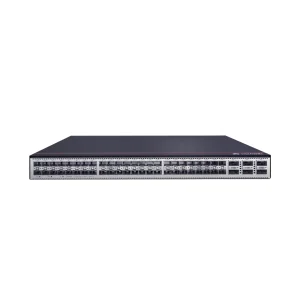 CE6820-48S6CQ-B
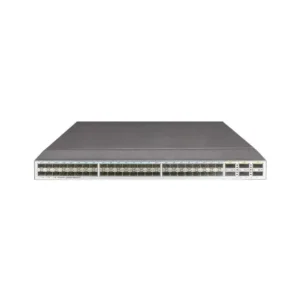 CE6885-48YS8CQ
Verified comparison
| Field | CE6820-48S6CQ-B | CE6885-48YS8CQ |
|---|---|---|
| Server-facing ports | 48 × 10GE SFP+ | 48 × SFP28 |
| Uplinks | 6 × 100GE QSFP28 | 8 × QSFP28 |
| Switching capacity | 2.16 Tbps | 8 Tbps |
| Forwarding rate | 470 Mpps | 1,200 Mpps |
| PoE | Non-PoE | Non-PoE |
| Stacking on this record | iStack | Not listed as a stack |
| Airflow on this record | Not stated as airflow | Port intake, reversible |
| Power | Dual hot-swappable AC/DC modules | 2 × 600 W AC |
When CE6820-48S6CQ-B makes more sense
- Servers are 10GE SFP+.
- Six 100GE uplinks match the fabric plan.
- You want the iStack note that is actually on this PID.
When CE6885-48YS8CQ makes more sense
- Server ports are SFP28.
- You need eight QSFP28 uplinks rather than six.
- The higher listed capacity matches the pod, and port-intake airflow fits the rack.
Do not pick a winner from capacity alone. A 10G server row does not become a better design because another PID lists 8 Tbps.
Leaf buying guide · Aggregation vs leaf article · Request a quote