Campus PoE/Multi-GE access switches and data-center leaf/TOR platforms solve different jobs. Putting both on one RFQ usually produces the wrong shortlist, the wrong optics plan, and a wasted clarification round.
Buyer rule: shortlist by role first (powered copper closet vs optic TOR vs campus core), then by brand and PID. Do not start from a single “48-port switch” request and hope the vendor guesses the class.
Why campus PoE and data-center leaf should not share one shortlist
A campus access switch is bought to terminate copper drops, power APs/phones/cameras, and uplink into distribution. A leaf/TOR is bought to terminate server optics and participate in a leaf–spine fabric. The decision drivers are not interchangeable:
- PoE budget and RJ45 Multi-GE density matter on campus; they are usually irrelevant on a Non-PoE leaf.
- Server-facing 10/25G and 40/100G fabric uplinks dominate leaf selection; campus closets more often need modular or fixed 1/10/25G uplinks into aggregation.
- StackWise / iStack closet stacking is a campus pattern. Leaf–spine ECMP is a fabric pattern. Treating “stacking support” as a universal must-have mixes those designs.
Side-by-side decision table
| Decision field | Campus PoE / Multi-GE access | Data-center leaf / TOR | Campus core / aggregation |
|---|---|---|---|
| Primary role | Wiring-closet access for users, APs, cameras | Server-facing leaf in a leaf–spine fabric | Campus distribution / core aggregation |
| Typical port type | RJ45 1G or Multi-GE copper | SFP+/SFP28 (and QSFP fabric ports) | Fiber SFP+/QSFP or modular line cards |
| PoE | Usually required (PoE+/PoE++ budgets) | Non-PoE | Typically Non-PoE |
| Server-facing speed | Not the buying driver | 1/10/25G (model-dependent) | Not a TOR substitute |
| Uplink / fabric speed | Modular or fixed uplinks into distribution | 40/100G fabric-facing uplinks common | High-density fiber aggregation / core |
| Latency / fabric focus | Closet access features, PoE, campus QoS | Fabric oversubscription and optic map | Campus aggregation scale and modularity |
| Stacking vs leaf–spine | Closet stacking often relevant | Leaf–spine role; not a closet stack substitute | Chassis or fixed core; redesign if replacing either |
| Typical deployment location | IDF / wiring closet / floor telecom room | Data-hall TOR / leaf rack | MDF / campus core room |
Campus PoE / Multi-GE access: when to choose it
Choose this class when the primary need is powered copper at the edge: Wi‑Fi AP density, IP phones, cameras, or Multi-GE copper for Wi‑Fi 6/6E APs. Start from port count, PoE budget vs PSU, and uplink type—not from data-center Tbps figures.
 C9300-24P24P PoE+ access
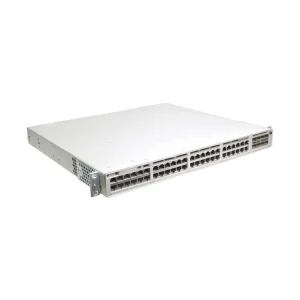 C9300-48P-ADenser PoE+ closet
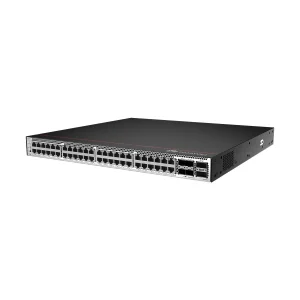 S5732-H48UM2CCMulti-GE access
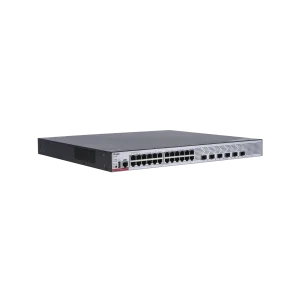 RG-S5315-24MG6XS-UP-EMulti-GE PoE++
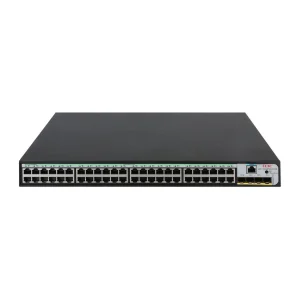 S5048PV5-EI-PWR48P PoE+ access
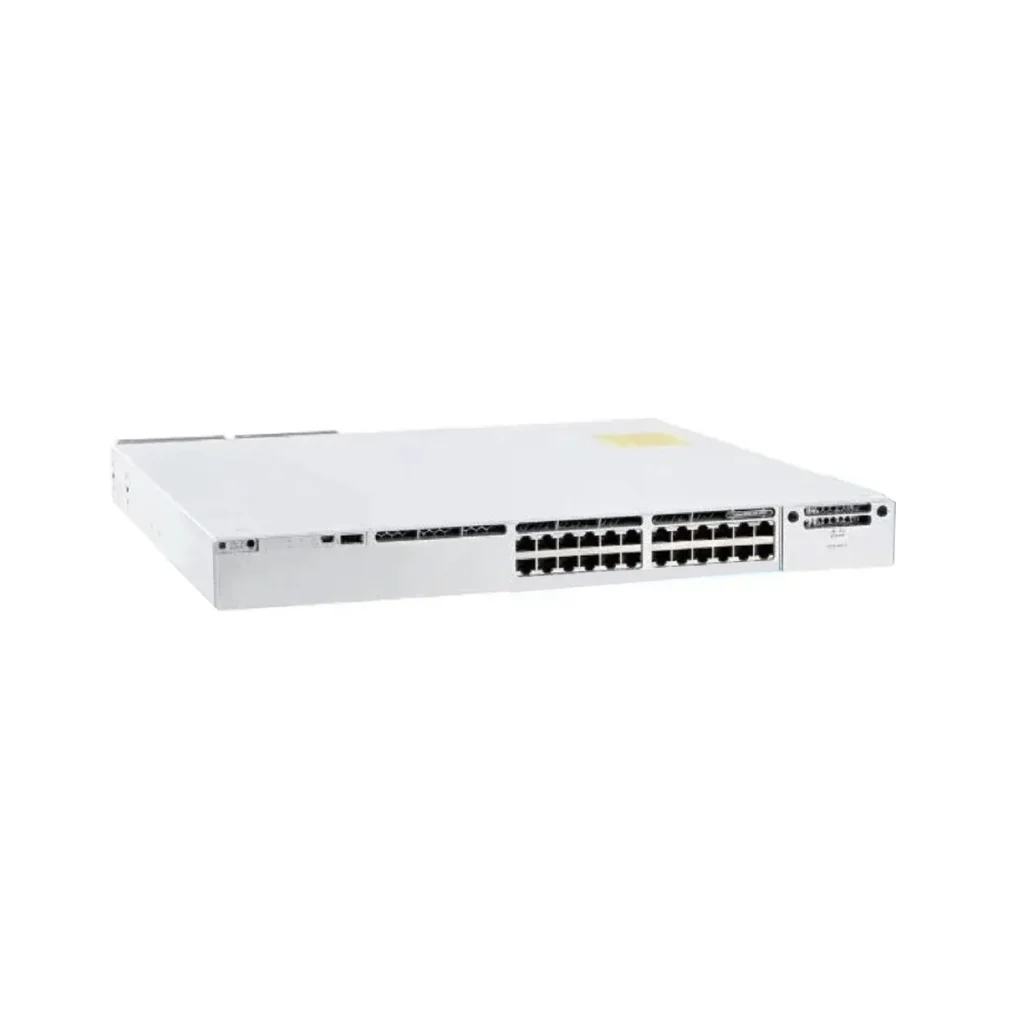
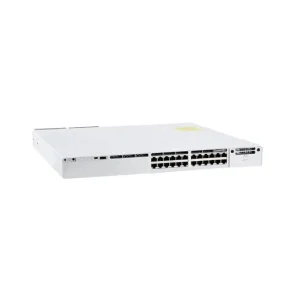
- Cisco C9300-24P — 24 × 1G PoE+ RJ45, modular uplink slot, StackWise-480, default PoE budget shown as 445W with PWR-C1-715WAC-P on this listing.
- Cisco C9300-48P-A — 48 × 1G PoE+ RJ45 for denser closets; StackWise-480 class stacking; confirm Network Module and PoE budget against the installed PSU on the quote.
- Huawei S5732-H48UM2CC — 48 × Multi-GE copper (100M–10G Base-T) with 25G/40G/100G uplink options and iStack; useful when AP copper speed outgrows 1G.
- Ruijie RG-S5315-24MG6XS-UP-E — 24 × Multi-GE PoE/PoE+/PoE++ with 6 × SFP+ uplinks; PoE budget up to 1440W depending on PSU modules.
- H3C S5048PV5-EI-PWR — 48 × 1G RJ45 PoE+ with 2 × 1G SFP uplinks for straightforward powered access closets.
Browse Access Switches and PoE Switches when the RFQ is closet-driven.
Data-center leaf / TOR: when to choose it
Choose leaf/TOR when servers (or storage nodes) need high-speed optics and the switch participates in a fabric. PoE is the wrong filter. Start from the optic map: server-facing speed, fabric uplink speed, port density, and oversubscription.
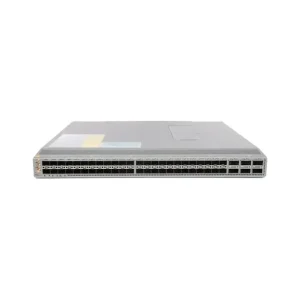 N9K-C93180YC-FX3
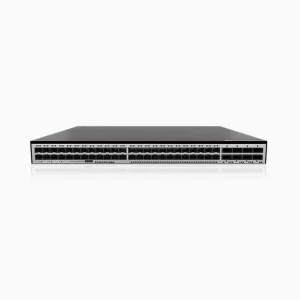 CE6855-48XS8CQ
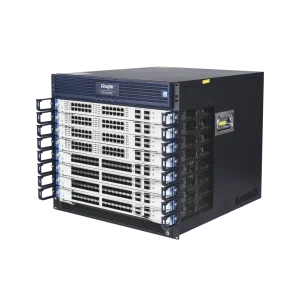 RG-S7810C
- Cisco N9K-C93180YC-FX3 — 48 × 1/10/25G SFP28 + 6 × 40/100G QSFP28; 3.6 Tbps / 1.2 Bpps; Non-PoE leaf/TOR class.
- Huawei CE6855-48XS8CQ — 48 × SFP+ with 8 × QSFP28; 2.56 Tbps / 1,200 Mpps; Non-PoE; front intake airflow (optional reverse) on this listing.
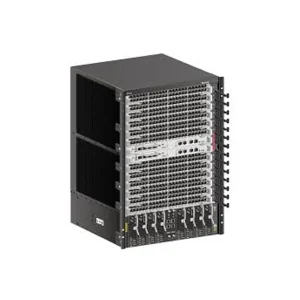
- Ruijie RG-S7810C — high-capacity data-center platform (up to 16 Tbps / 12,000 Mpps on this listing). Confirm the installed module / port map on the RFQ; do not assume a fixed 48×SFP28 faceplate from the chassis SKU alone.
For a deeper leaf shortlist process, use the Data Center Leaf Switch Buying Guide and the Data Center Switches category.
Campus core / aggregation: a third class
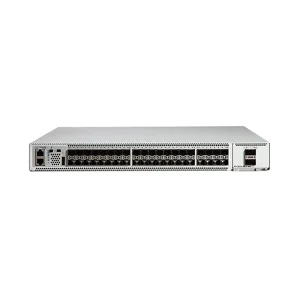
Cisco C9500-40X-A (40 × 10G SFP+, Non-PoE, up to 960 Gbps) and modular chassis such as Huawei S7712 sit above the access layer. They are not drop-in substitutes for either a PoE closet switch or a TOR leaf.
Replacing a chassis core with a leaf TOR—or stuffing a PoE access SKU into a fabric leaf role—forces a redesign of optics, oversubscription, and often cabling. Keep core/aggregation on its own shortlist.
Common procurement mistakes
- Issuing one RFQ for “48-port switches” without stating PoE vs Non-PoE and copper vs optic.
- Comparing campus PoE watt budgets to leaf Tbps figures as if they were the same scorecard.
- Assuming any 25G/100G faceplate is automatically the right leaf without checking oversubscription and optic SKUs.
- Using a leaf SKU to replace campus core without validating aggregation ports, HA, and operational model.
- Forgetting PSU / PoE budget and Network Module choices on Catalyst 9300 line items.
RFQ checklist
Send enough for a precise quote on the first pass:
- Exact manufacturer PID (not family shorthand).
- Quantity and preferred condition.
- Role: campus access / PoE, leaf–spine TOR, or campus core/aggregation.
- Port map needs: copper vs optic, speeds, Multi-GE if required.
- PoE load estimate (device count × class) or explicit Non-PoE.
- Uplink / fabric optics and distances.
- Stacking vs chassis modules / airflow preference where relevant.
- Site power and rack constraints that affect PSU choice.
Topic FAQ: What to send for a switch RFQ · Campus PoE vs leaf FAQ.
Related products, guide, comparison, and solution
C9300-24P vs C9300-48P-ACampus PoE density comparison
Data-center solutionFabric role context
Request a Quote Browse PoE switches Browse data-center switches